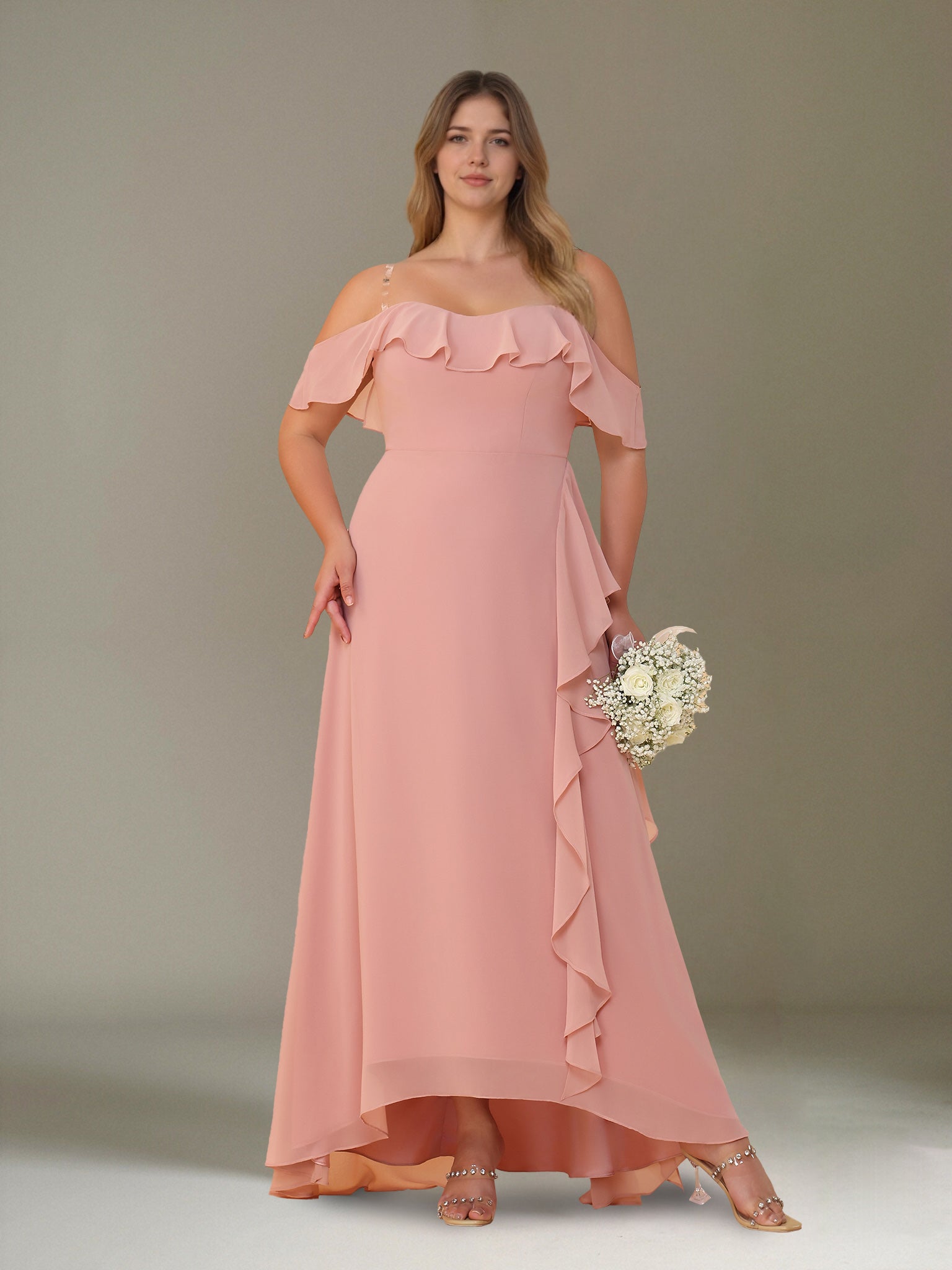
Beach bridesmaid dresses work best when the fabric moves without becoming unmanageable, the hem suits sand and wind, and the bodice stays secure in heat. Chiffon and other lighter constructions are useful starting points, but fit and lining matter as much as fabric names. Coordinate color and formality first, then let each bridesmaid choose a neckline she can wear comfortably outdoors.
Translate the beach venue into practical needs
“Beach wedding” can mean a barefoot ceremony on loose sand, a boardwalk, a lawn beside the water, or a resort terrace. Ask where the bridal party will actually stand and walk before choosing the dresses.
Confirm:
- whether the ceremony surface is sand, decking, grass, or stone
- the expected temperature, humidity, and wind
- how far attendants must walk outdoors
- whether the reception moves indoors
- the time of day and level of formality
A floor-length dress may look beautiful on a resort terrace but collect sand during a long walk on the shoreline. An ankle-length or controlled high-low hem can reduce dragging. If the wedding moves into a formal ballroom, a full-length chiffon dress may connect both settings better than a casual short dress.
For the bride's own planning, the beach wedding dress guide covers many of the same environmental questions. The destination wedding guest scene can also help clarify how travel and outdoor conditions affect the wider dress code.
Plan for wind, not only heat
Very loose panels, unsecured wraps, and lightweight overskirts can behave unpredictably in wind. Look for a bodice that stays anchored and a skirt with enough lining or structure to fall back into place.
Expect the temperature to change
Coastal air can cool quickly after sunset. A dress that feels comfortable at the afternoon ceremony may need a coordinated wrap later. Treat the layer as part of the outfit plan instead of an emergency addition.
Choose fabric by construction and lining
Fabric names are helpful, but they do not tell the whole story. Weight, layers, lining, and cut determine how a dress feels.
Chiffon for light movement
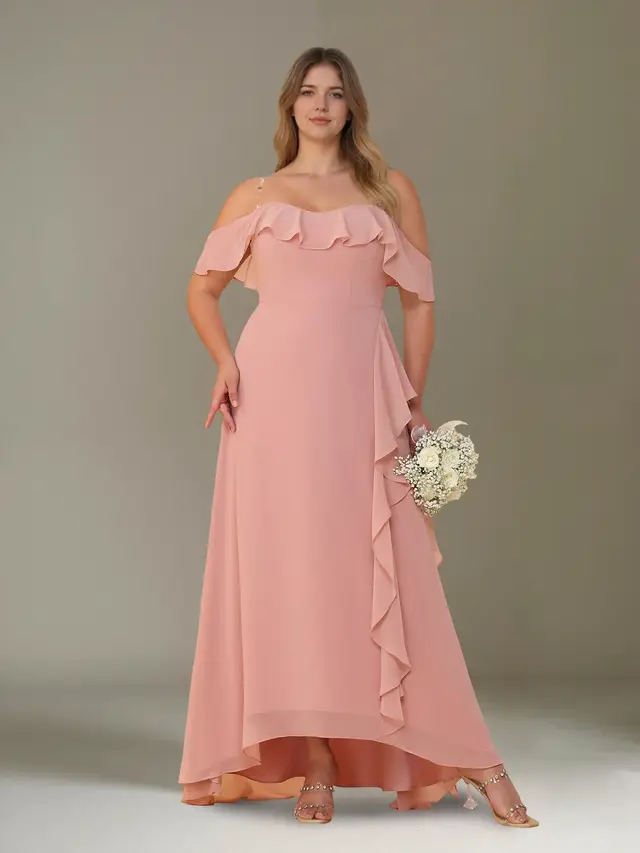
Chiffon is popular for beach weddings because it creates movement without the high shine of satin. A lined chiffon skirt can feel airy while remaining appropriate for a ceremony. Check whether ruffles or split panels stay controlled in wind.
Satin for a cleaner destination look
Lightweight satin can work for a resort or terrace wedding, especially when the dress has a simple silhouette. It reflects sunlight more strongly and can show moisture or wrinkles, so inspect the finish and plan careful transport.
Velvet and heavy embellishment need a clear reason
Dense fabrics and extensive beading may feel too warm for direct sun or humid sand. They can still work for a cool-season coastal event or an indoor reception, but they should match the actual temperature and schedule.
The bridesmaid fabric guide explains chiffon, satin, and other choices in more detail. If the final decision is between two common options, use the chiffon versus satin comparison.
Select a hem that works with the surface
Length should serve both the visual brief and the ground underfoot.
Floor-length for formal resort settings
A long dress creates a continuous formal line and can photograph well against an open horizon. Keep the hem close enough to the ground for elegance without leaving excess length to drag. Every attendant should hem her own dress with the planned footwear.
Ankle-length for easier sand movement
An ankle-length hem keeps more fabric away from the ground while remaining polished. It can also make flat sandals or block heels feel intentional.
High-low or asymmetric hems for controlled movement
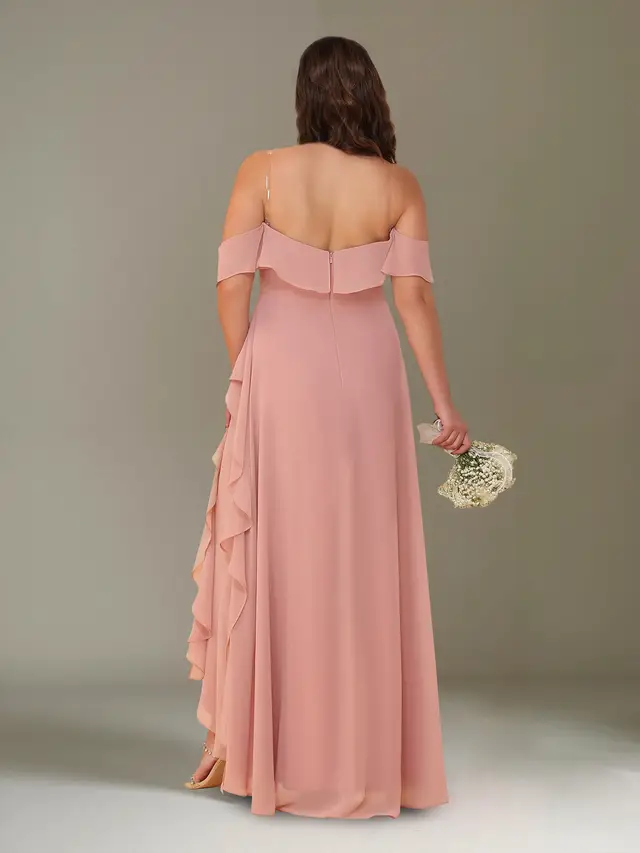
An asymmetric design can add motion and keep part of the skirt clear of the sand. Check how it looks from the side and back, because strong wind will reveal the lining and interior construction.
Make the bodice secure and breathable
Outdoor photographs and ceremonies involve more movement than a fitting-room pose.
Straps and sleeves should allow arm movement
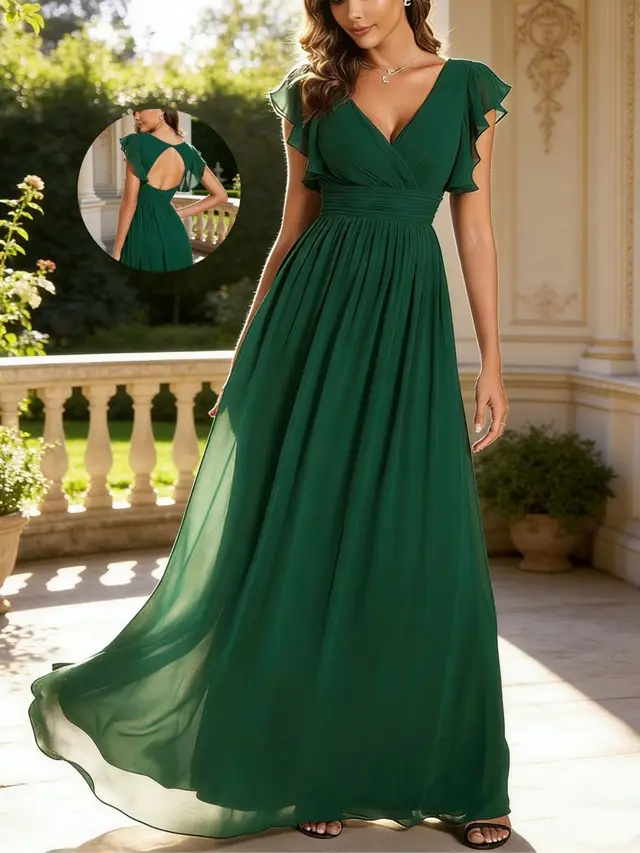
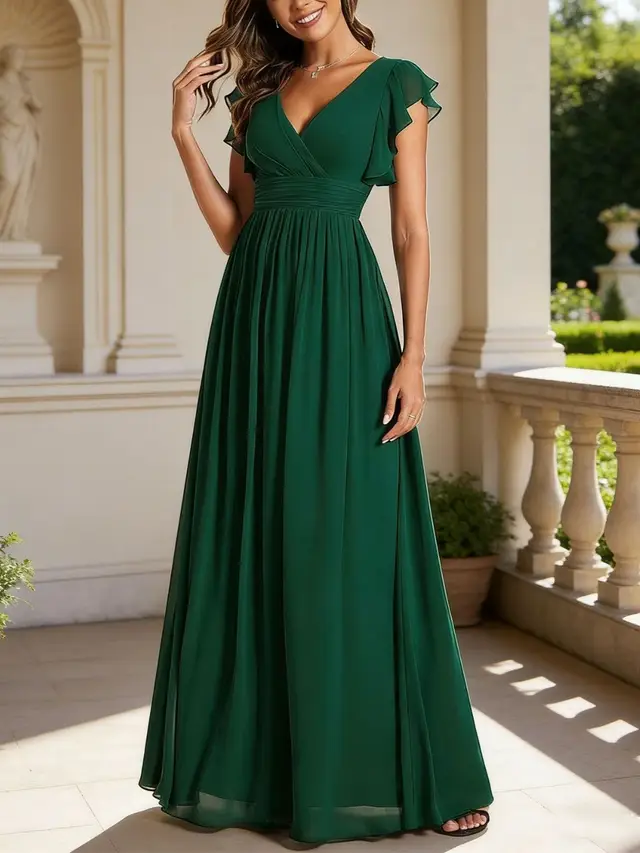
V-necks with sleeves, one-shoulder designs, and wider straps can each provide a stable framework. Raise both arms, turn, and lean forward during the fitting. If the neckline shifts, the dress may need alteration or a different design.
Off-the-shoulder styles need tension control
An off-the-shoulder neckline can suit a relaxed coastal setting, but the band should not restrict the upper arms or slide upward. Test hugging, carrying a bouquet, and reaching for something at table height.
Lining should remain comfortable in humidity
A sheer-looking outer layer still depends on the lining against the skin. Check the lining's length, breathability, and tendency to cling. Consider anti-chafing needs and undergarment seams before the wedding day.
Coordinate color with the beach light
Strong sun, pale sand, water, and sunset light can change how colors photograph. Request or view fabric in natural light when possible.
Soft blues, greens, muted pinks, warm neutrals, and deeper coastal tones can all work; the best choice depends on the flowers and overall palette. Avoid assuming every beach wedding must use pale color. A richer shade can create welcome contrast against a bright background.
When mixing styles, keep color and fabric source consistent if exact matching matters. The bridesmaid color coordination guide offers a structured palette process.
Build a travel-ready dress plan
Destination dresses should be easy to identify, transport, and refresh.
- Save the order details and a photograph of the exact dress.
- Carry the dress rather than checking it when practical.
- Use a breathable garment bag and avoid crushing embellishment.
- Confirm whether the venue provides a steamer or pressing service.
- Pack the planned undergarments, shoes, and any wrap together.
- Inspect and hang the dress as soon as you arrive.
- Schedule alterations early enough that the finished dress can still be packed safely.
Do not experiment with high heat on delicate fabric. Follow the garment's care instructions and ask a professional when the material is uncertain.
Verified Lovavere styles to compare
- Off-the-Shoulder Asymmetric Chiffon Bridesmaid Dress offers chiffon movement, an asymmetric hem direction, and an off-the-shoulder neckline to compare for a coastal ceremony.
- V-Neck Chiffon Bridesmaid Dress with Short Sleeves provides a full-length chiffon alternative with a V-neck and sleeves.
Both live product pages list standard sizes through 22. Confirm the current size chart, color choices, production details, and policies before ordering, and hem each dress for the attendant's footwear and venue surface.
Shop beach-ready bridesmaid dresses
Browse bridesmaid dresses and compare lighter fabrics, secure necklines, and workable lengths. Keep the shared palette clear while allowing each attendant to choose the fit she can move in confidently.
Frequently asked questions
What fabric is best for a beach bridesmaid dress?
Chiffon is a practical starting point because it moves lightly, but lining, weight, and cut are equally important. Test the complete dress for heat, wind, and opacity.
Should beach bridesmaid dresses be short?
Not necessarily. Floor-length dresses can work for formal resort weddings, while ankle-length or asymmetric hems may be easier on sand. Match length to the actual surface and dress code.
Can bridesmaids wear heels on the beach?
Thin heels are difficult on loose sand. Flats, sandals, wedges, or block heels are more stable, depending on the venue. Hem the dress while wearing the final shoe.
How do you stop light dresses from blowing around?
Choose a lined skirt with controlled volume, avoid unsecured panels, and test the dress outdoors if possible. A secure bodice and considered hem matter more than simply choosing a heavier fabric.