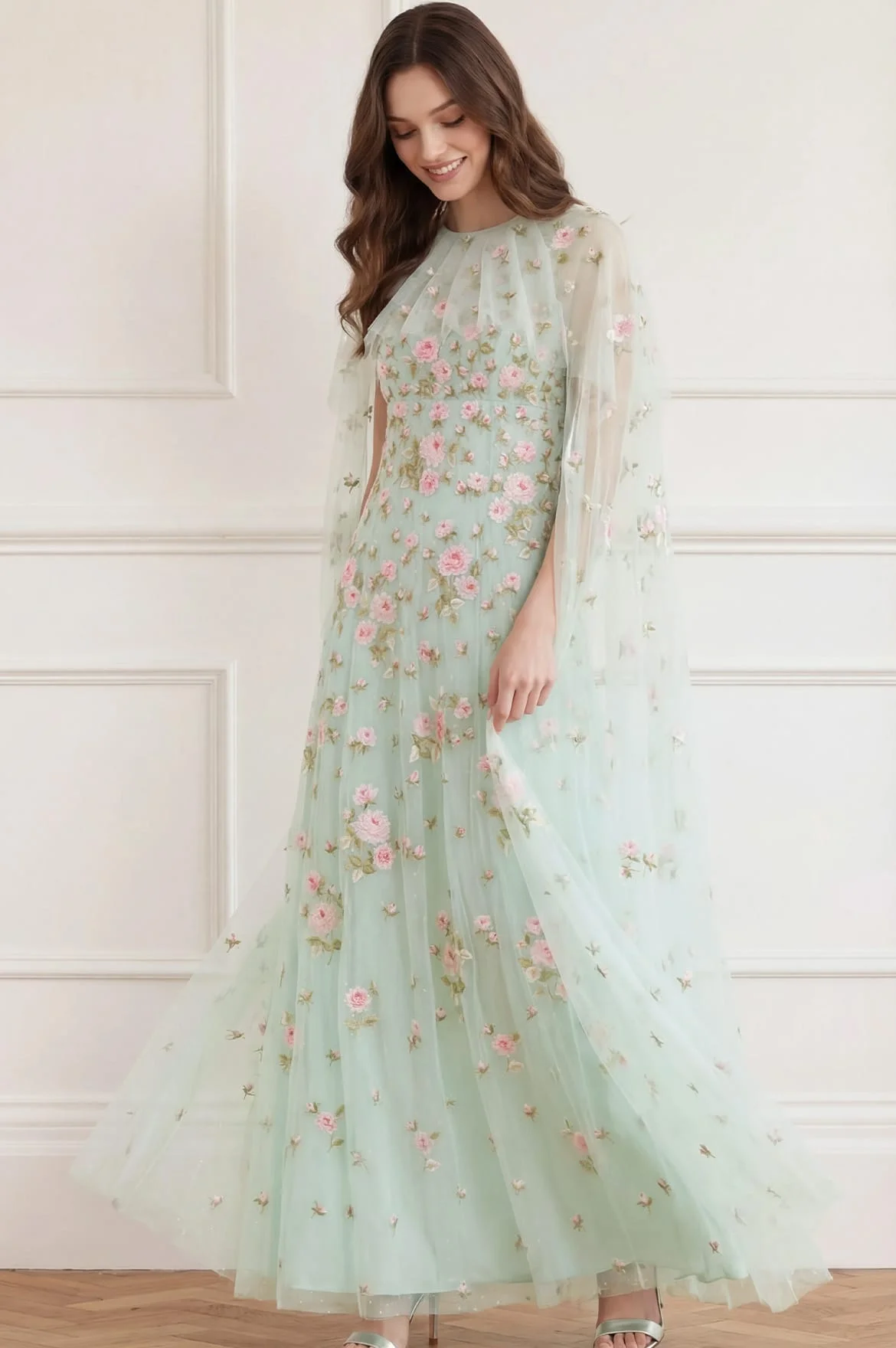
Black tie is the most common formal dress code for evening weddings, galas, and charity events. It signals floor-length gowns, refined fabrics, and polished accessories — but it leaves plenty of room for personal style.
What does black tie mean for women?
Black tie for women means a floor-length evening gown or a formal cocktail dress that reaches below the knee. The silhouette should be elegant and the fabric should be luxurious — think satin, velvet, chiffon, or beaded crepe. Sequins and embellishment are welcome, provided they feel deliberate rather than casual.
Can you wear a short dress to a black-tie event?
A short dress is generally not recommended for black-tie occasions. The dress code calls for floor-length or at least midi-length formal gowns. If the invitation specifies "black tie optional" or "creative black tie," a dressy cocktail-length gown may be acceptable — but floor-length is always the safer choice.
Can you wear pants to a black-tie event?
Yes. A formal jumpsuit or tailored evening pantsuit with a elegant top is perfectly appropriate for black-tie events when the fabric and cut are on par with a formal gown.
Best silhouettes for black tie
| Silhouette | Best for | Why it works |
|---|---|---|
| A-Line | Hourglass, pear, rectangle | Flattering on most body types; moves gracefully on the dance floor |
| Column/Sheath | Petite, athletic | Creates a long, clean line; photographs beautifully |
| Mermaid | Hourglass, inverted triangle | Dramatic red-carpet effect; suits formal gala settings |
| Ball Gown | Pear, hourglass | Maximum formal impact; traditional black-tie choice |
Fabric and color for black-tie events
The fabric you choose determines whether your gown reads as formal or casual.
Recommended black-tie fabrics:
- Satin — the classic black-tie choice, reflects light beautifully
- Velvet — rich texture for fall and winter events
- Chiffon — lightweight elegance for warm-weather galas
- Crepe — understated luxury that drapes well
- Sequin or beaded — appropriate when the embellishment is refined
Color guidance: Deep jewel tones — navy, emerald, burgundy, and amethyst — read as elegant and formal. Classic black is always correct. For warm-weather black-tie events, champagne, blush, and soft gold are seasonally appropriate.
Can you wear red to a black-tie wedding?
Yes. Red is perfectly acceptable for black-tie weddings, though it is worth considering the couple's color palette. Deep burgundy or wine red is a popular choice that photographs well.
Black-tie accessories
| Accessory | Recommendation |
|---|---|
| Shoes | Closed-toe pumps or strappy heels; avoid open-toe in formal religious venues |
| Jewelry | Statement earrings or a bracelet; avoid chunky necklaces with embellished necklines |
| Clutch | Small metallic or beaded bag; nothing larger than a clutch |
| Wrap | Pashmina or bolero for cooler evenings or air-conditioned venues |
Black-tie gowns from Lovavere
All of our evening gowns are available made-to-order with standard or custom sizing. For floor-length hems, include your planned heel height in the custom measurements field so the length is cut to your shoes. Shop black-tie evening dresses →
Frequently asked questions
What is the difference between black tie and white tie?
White tie is the most formal dress code and requires floor-length ball gowns, long white gloves, and often a tiara for married women. Black tie is one step below — floor-length gowns are required but gloves and tiaras are not.
Is a black dress appropriate for a black-tie wedding?
Yes. Black is always appropriate for black-tie events. Accessorize with metallic or jewel-tone accents for a festive look.
Can you wear sequins to a black-tie event?
Yes. Sequins and beadwork are welcome at black-tie events when the gown is well-constructed and the embellishment feels deliberate rather than costume-like.
How early should I order a black-tie gown?
Made-to-order gowns require 4–6 weeks for production plus shipping. Order at least 8 weeks before your event to allow time for any alterations.
Related: [Wedding guest dress guide →](/blog/wedding-guest-dress-guide)