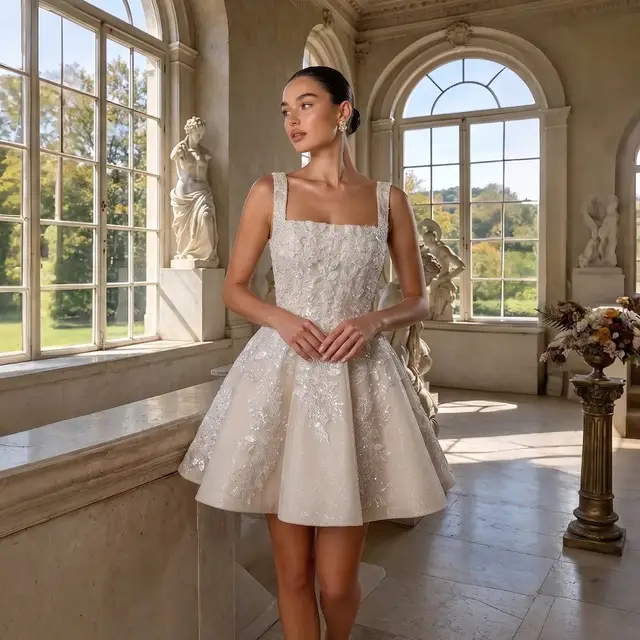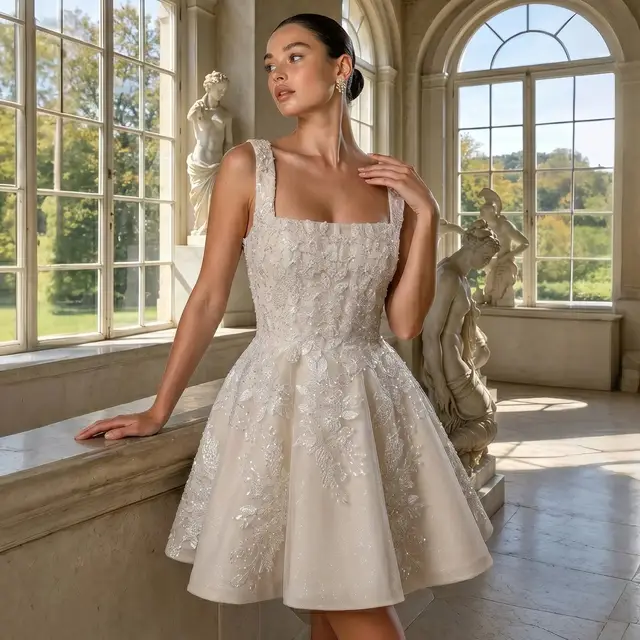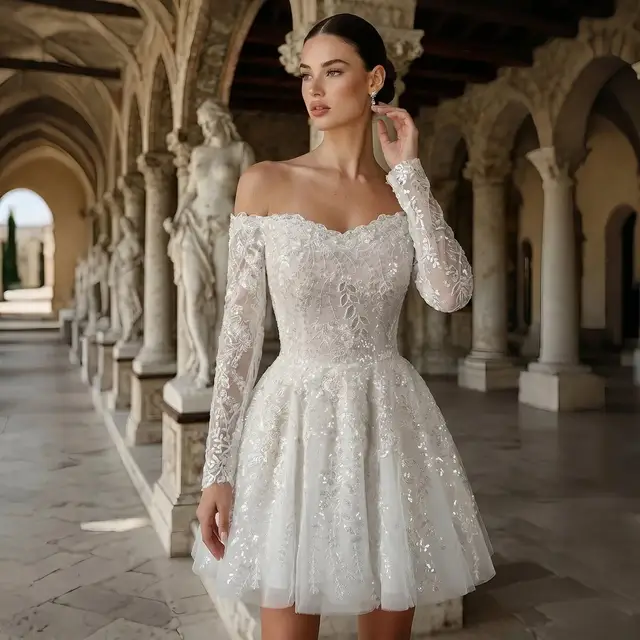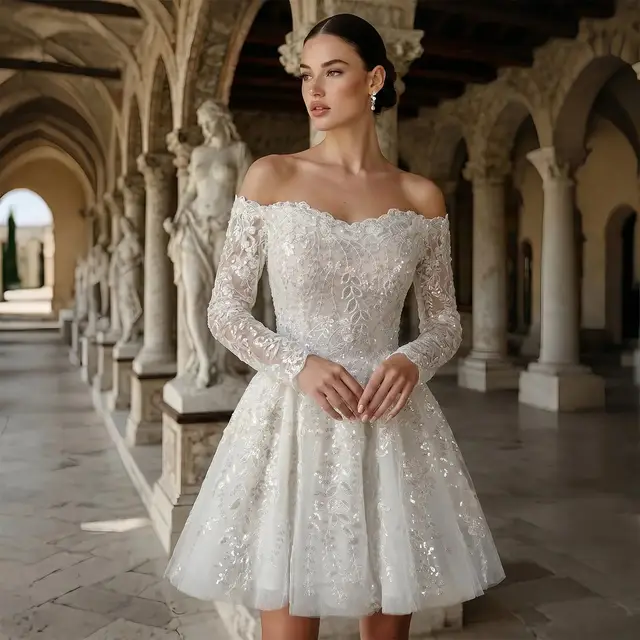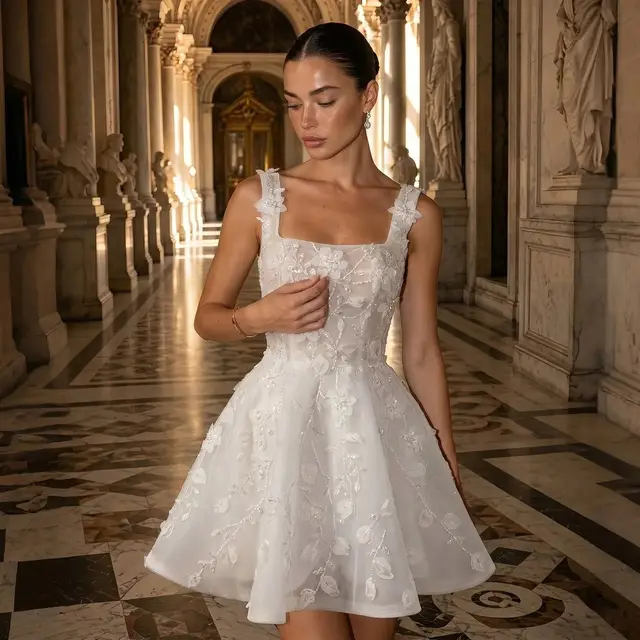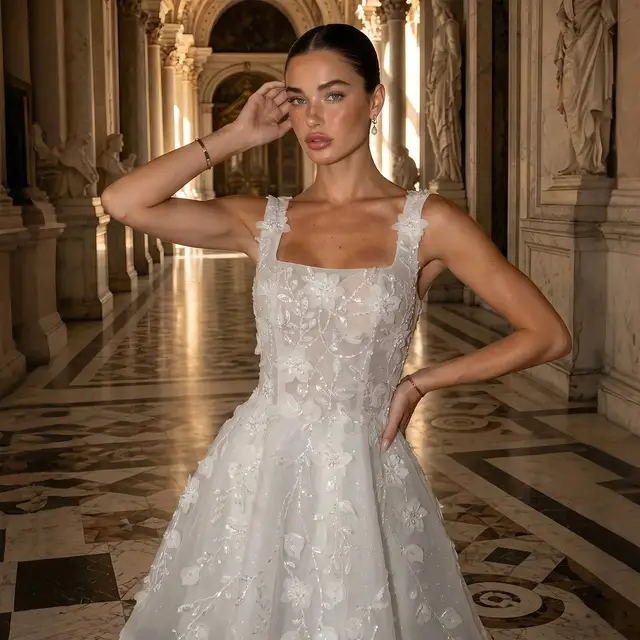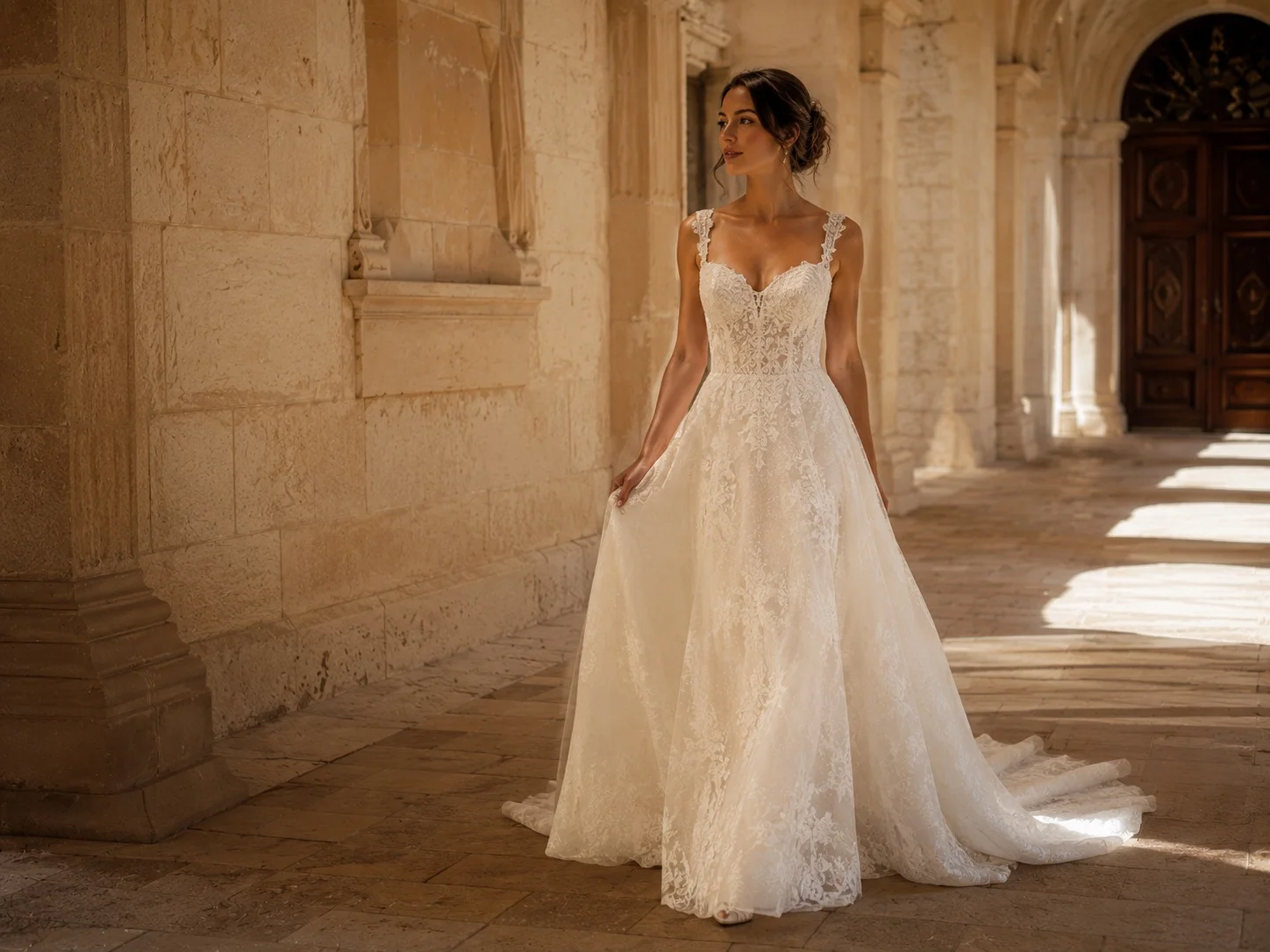
For most brides, a second dress for the wedding reception is worth it when the ceremony gown is heavy, long, restrictive, or hard to dance in. The safest second look is usually a short or tea-length bridal dress in lace, satin, or another polished fabric that still reads bridal in photos but feels easier to move, sit, eat, and celebrate in.
Google's public Wedding Season Trends story shows that "second dress" ranked first among U.S. searches ending in "...for wedding reception." That makes this a useful shopping topic for brides who already understand the ceremony look they want and now need a reception outfit that is lighter, faster, and more comfortable.
If you are still deciding between full-length ceremony silhouettes, start with our wedding dress silhouettes guide. If you already know your measurements may need more precision, review standard vs custom sizing before you order.
Do you need a second dress for the reception?
Not always. A second look makes sense when it solves a real problem, not just because it looks fun on social media.
Good reasons to change
- Your ceremony dress has a long train, bustle, or overskirt that will slow you down at dinner or on the dance floor.
- Your ceremony silhouette is fitted enough that sitting, walking quickly, or dancing will be annoying after an hour or two.
- You are getting married in warm weather and want a lighter dress once the formal photos are finished.
- You want a different mood for the reception, such as a playful short dress after a formal cathedral or ballroom ceremony.
- You want to protect a more delicate ceremony hem from spills, outdoor surfaces, or heavy foot traffic.
When you can skip the second dress
- Your ceremony dress is already short, tea-length, or easy to move in.
- You prefer one uninterrupted bridal look from ceremony through last dance.
- Budget is tighter and you would rather invest in one stronger gown plus alterations.
- Your reception is small, short, or seated enough that movement is not a problem.
Best lengths and silhouettes for a reception second look
If you want one answer, choose a short A-line. It is usually the easiest reception silhouette to move in, photograph, and restyle.
| Style | Best for | Watch for |
|---|---|---|
| Short A-line | Most brides; easiest all-around second look | Keep the fabric polished so it still reads bridal |
| Mini or above-knee | After-party energy, dancing, city venues | Shoes become more visible, so they need to feel intentional |
| Tea-length | Brides who want movement without going fully short | Can feel slightly more formal than a mini |
| Soft fitted short dress | Modern, fashion-forward reception looks | Less forgiving for movement than an A-line |
If your ceremony gown is dramatic and structured, a simpler reception dress usually works better than another heavy statement piece. The contrast helps each look feel deliberate.
What keeps a short reception dress bridal
Length alone does not make the dress feel like a second look. Fabric and finish matter more than many brides expect.
| Detail | Why it works for a reception change |
|---|---|
| Lace | Keeps the dress bridal even when the hem is short |
| Satin | Clean, polished, and easy to dress up with shoes and earrings |
| Beading or subtle sequin | Adds light-catching detail for evening photos |
| Tulle or sparkle overlay | Creates movement without the weight of a full ceremony skirt |
| Structured neckline | Helps the dress feel intentional rather than casual |
Avoid fabrics that read too casual, such as plain cotton or anything that feels more like a day dress than a wedding look.
How to choose your second dress in three steps
1. Start with movement, not aesthetics
Ask what your ceremony gown makes difficult. If the issue is dancing, a short A-line or mini is the clearest fix. If the issue is heat, look for less volume and easier fabric. If the issue is a very formal ceremony gown, a sleeker second look can create contrast without losing the bridal feel.
2. Match the reception venue
- Ballroom or hotel reception: short satin, lace, or embellished dresses still look formal enough.
- Garden or outdoor reception: lighter weight and easier walking matter more than drama.
- Restaurant, rooftop, or after-party venue: this is where shorter hemlines usually feel the most natural.
3. Keep fit and timing realistic
If your second dress is made to order, do not treat it as a last-minute add-on. Order it with enough time to compare measurements, receive it, and make any local adjustments. Our how to measure for made-to-order gowns guide is the best starting point if you plan to submit custom measurements.
Real product picks from Lovavere
These product links point to wedding dresses that already exist in the current catalog and fit the reception-second-look use case.
1. Sleeveless A-Line Short with Deep V Back Wedding Dress — SW725
Best for brides who want the safest all-around second look. This style is a short A-line with a square neckline, lace fabric, and beading, so it keeps a bridal feel while staying easy to move in.
2. Off-the-Shoulder Lace Short Wedding Dress — SW723
Best for brides who want a more romantic or evening-forward reception change. It combines a short A-line silhouette with lace, an off-the-shoulder neckline, and long sleeves for a slightly dressier second look.
3. 3D Floral Appliqué Short with Sparkle Tulle Wedding Dress — SW722
Best for brides who want something playful in motion and stronger in flash photography. This style is a short A-line with a square neckline, lace, and beading, plus the sparkle-tulle effect named in the product title.
Should your second dress be different from the ceremony gown?
Usually, yes, but the change does not need to be dramatic.
Good contrast options:
- Long ceremony gown, short reception dress
- Structured ceremony silhouette, lighter reception silhouette
- Traditional ceremony styling, more playful reception neckline or finish
You do not need to change everything. If your ceremony gown is minimal, a short lace or embellished reception dress is often enough contrast on its own.
When to order a second reception dress
The second look should be planned early enough that it does not become a rushed compromise. A practical rule is to choose it soon after your ceremony gown, not in the final weeks before the wedding. If you are between sizes, compare measurements first and use our standard vs custom sizing guide before checkout.
Shop the collection
If you already know you want a bridal second look, start with our wedding dresses collection. It is the best place to compare full-length ceremony options against shorter styles and decide whether you want one dress or two.
Frequently asked questions
Do I need a second dress for my wedding reception?
No. You only need one if it solves a real problem such as comfort, heat, movement, or wanting a different reception mood.
Should a reception dress always be shorter than the ceremony dress?
Not always, but shorter lengths are the most practical change because they improve movement immediately. Tea-length and short A-line shapes are the safest starting points.
Can a second dress still feel formal?
Yes. Formality comes from fabric, finish, and styling as much as length. Lace, satin, beading, and structured necklines keep a short dress from reading casual.
Is it better to bustle the ceremony gown or change dresses?
If your gown already feels comfortable bustled and you like the uninterrupted look, keep one dress. If movement, heat, or damage risk still feels high after bustling, a second look is usually easier.