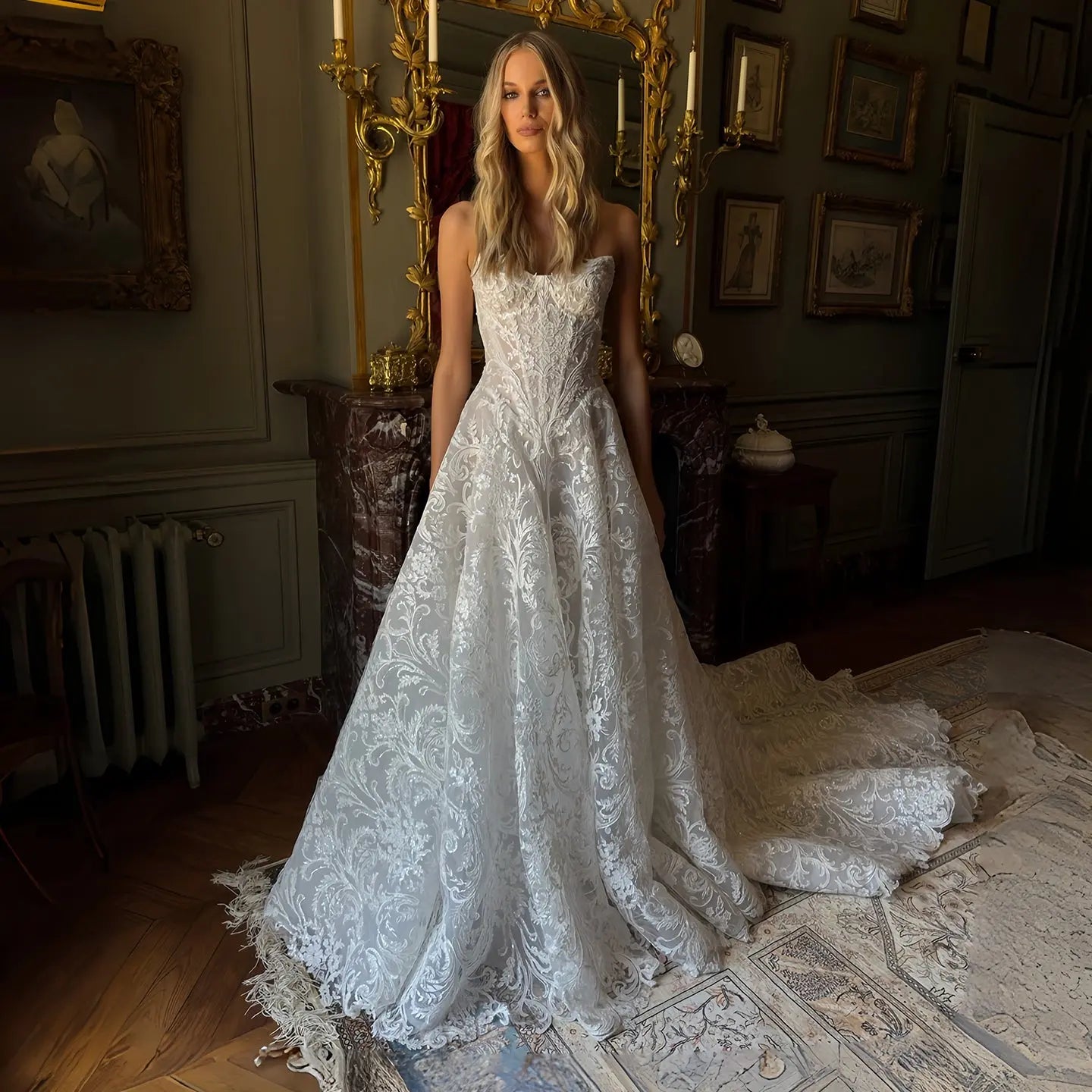
Choose a wedding dress train by balancing visual impact with the venue, walking surface, fabric weight, and how long you want to manage it. Shorter sweep and court-style trains are easier to move in, while chapel and cathedral lengths create more drama but need space, handling, and a reliable bustle. Test the complete gown before committing.
Understand the common train categories
Train names are useful comparisons, but exact measurements vary by designer. Always review the product photographs and specifications.
Sweep and court trains
A sweep train extends only a little beyond the hem, while a court train creates a more noticeable trail. These lengths can give a bridal finish with less fabric to arrange and bustle.
Chapel trains
A chapel train adds visible length behind the gown and suits many ceremony settings. It needs enough aisle space and usually benefits from a bustle for the reception.
Cathedral and longer trains
Cathedral trains create a dramatic formal effect. They require more room, careful transport, and a clear plan for stairs, outdoor surfaces, photographs, and the reception.
Train length interacts with silhouette. The wedding dress silhouette guide explains how A-line, mermaid, ball gown, and sheath shapes distribute fabric differently.
Match the train to the venue
A long train can spread beautifully in a wide indoor aisle, but it may collect leaves, sand, or moisture outdoors. Ask about aisle width, flooring, stairs, and the distance between preparation space and ceremony.
For a beach or shoreline ceremony, the beach wedding dress guide covers wind and sand. For a compact civil venue, the courthouse wedding dress guide offers lower-volume options.
Consider fabric and edge detail
Lace borders and scalloped edges create definition, while plain satin can produce a clean uninterrupted line. Tulle may feel light but can catch on rough ground. Dense lace and beading add weight.
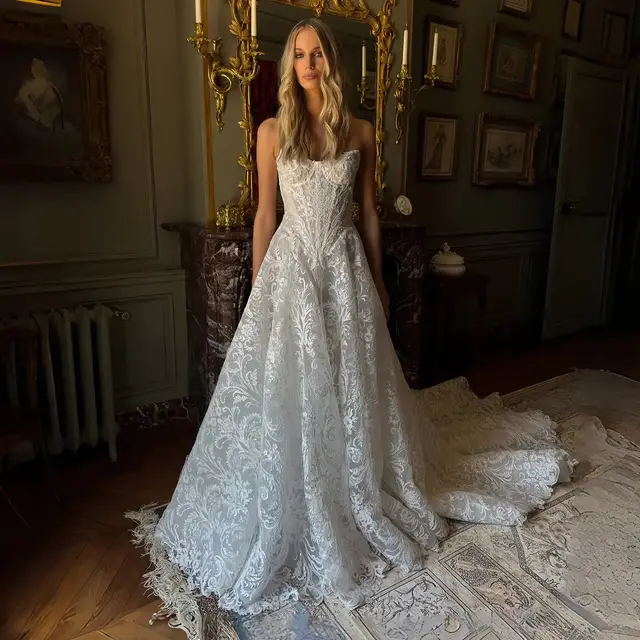
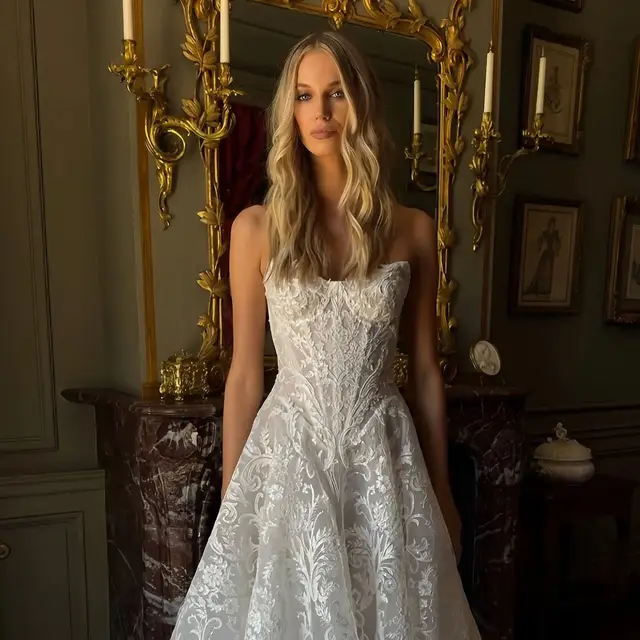
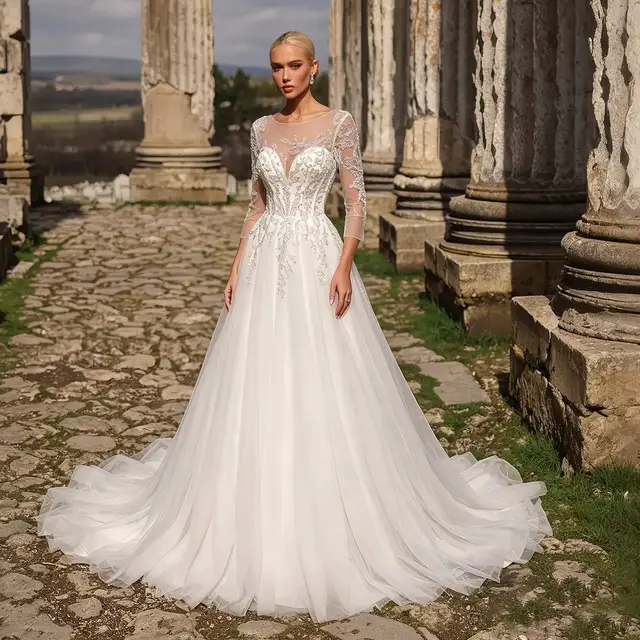
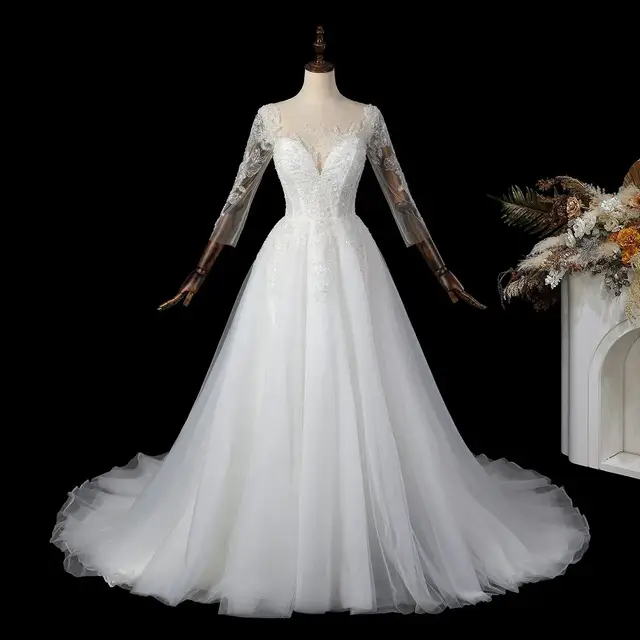
The Strapless Lace A-Line with Scalloped Train shows how a defined lace edge frames the train. The Illusion Neck Lace and Tulle Wedding Dress with Cathedral Train provides a longer formal comparison. Verify live product details and measurements before deciding.
Plan the bustle and handling
A bustle lifts the train for walking and dancing, but the correct type depends on seams, fabric, and decoration. Ask an alterations professional to design and demonstrate it. Photograph the fastened bustle and assign one trusted person to practice it before the wedding.
- Walk forward, turn, and back up carefully in the unbustled gown.
- Practice arranging the train for photographs.
- Test the bustle while walking and dancing.
- Carry a small repair kit recommended by the alterations professional.
- Inspect attachment points after the ceremony.
The formal wear care guide provides storage and handling principles for lace, satin, tulle, and embellished fabrics.
Shop wedding dresses with trains
Browse wedding dresses to compare train shape, skirt volume, lace placement, and neckline. Save front, side, and back views because the train is primarily a rear-view design decision.
Frequently asked questions
What is the easiest wedding dress train to walk in?
A short sweep train is generally easier than a chapel or cathedral train, but fabric weight, skirt width, shoes, and surface also affect movement.
Does every wedding dress train need a bustle?
Not every short train does, but most longer trains benefit from one for the reception. Confirm with an alterations professional rather than assuming a bustle is built in.
Can a wedding dress train be shortened?
Often, but lace borders, appliqué, and shaped edges can make the alteration complex. Ask before ordering if train length is a concern.