The best winter wedding dress cover-up keeps you comfortable between locations while letting the gown remain the focus indoors. Start with the coldest part of your schedule—arrival, portraits, or exit—then choose a layer that fits over the dress, can come off quickly, and will not snag its details. Plan the outer layer, shoes, and bouquet together before the final fitting.
Start with the actual cold-weather moments
A winter wedding is not cold in one uniform way. You may step from a heated car into wind, pose outdoors for ten minutes, sit through a ceremony, and dance in a warm room. List each transition before choosing a cover-up.
- Arrival and portraits: These may need the most insulation, especially if the venue has an exposed entrance or outdoor grounds.
- The ceremony: Ask whether doors stay open, whether guests will be seated near a draft, and whether a coat can be removed without help.
- The reception: A layer that feels essential outside can become distracting on a crowded dance floor.
- The exit: Keep the final layer and a warm pair of shoes accessible rather than relying on a last-minute search.
For the dress itself, the long-sleeve wedding dresses guide can help you compare built-in coverage with a separate outer layer. A separate layer is often the more flexible choice when indoor temperatures are uncertain.
Choose the layer by fit, not just by warmth
The right cover-up should close comfortably over the dress and still allow you to move your arms, hold a bouquet, and sit in a car. Bring the actual dress—or at least a similarly shaped garment—to any outerwear appointment.
A tailored coat for travel and longer outdoor time
A structured coat can work well for travel, outdoor photographs, and a cold exit. Check the shoulder width first: a close coat can pull across the gown's sleeves, straps, or upper skirt. Its hem should also sit intentionally against the gown rather than catching underneath it.
A cape or wrap for fast transitions
A cape or wrap is easy to take on and off without disturbing hair and makeup. It may be a sensible choice for a short outdoor portrait session or the walk between the car and venue. Because it offers less coverage than a coat, test it in the temperature you expect rather than assuming it will be enough.
A jacket for a defined, modern line
A jacket changes the silhouette more noticeably, which can be exactly the point if it suits your ceremony style. Make sure the collar, sleeves, and closures do not compete with the neckline or catch on any dress detail. Photograph the complete outfit from the front, side, and back before deciding.
Coordinate the cover-up with the gown
Think of the outer layer as one part of the wedding-day outfit, not an emergency add-on. Start with the gown's neckline, sleeve volume, skirt shape, and surface detail.
Neckline and shoulder room
An open neckline can leave more visual room for a cape, wrap, or high-collar coat. A dress with a pronounced shoulder detail may need a simpler layer that does not crush or hide it. If you are deciding among necklines, the wedding dress necklines guide offers a useful starting comparison.
Train and skirt volume
Carry the coat or cape during a fitting and walk a few steps with the train arranged as it would be outside. A long layer should not drag on the skirt or get caught under the hem. For a gown with a train, confirm how your bustle or helper will handle the outer layer after photographs.
Color, texture, and photographs
Use a color and finish that supports the dress rather than competing with it. Photograph the layer in the venue's expected light, including flash if your photographer plans to use it. There is no need to force a seasonal color: a clean neutral, a considered contrast, or a texture that suits the dress can all work.
Compare two verified Lovavere dresses before you plan layers
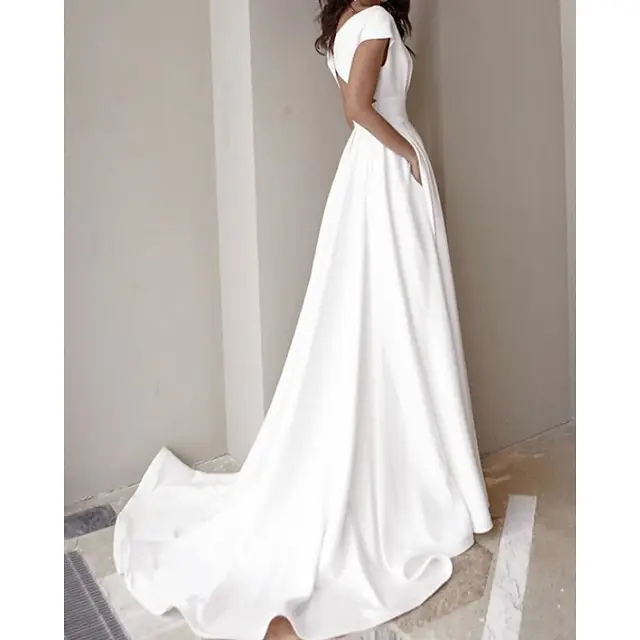
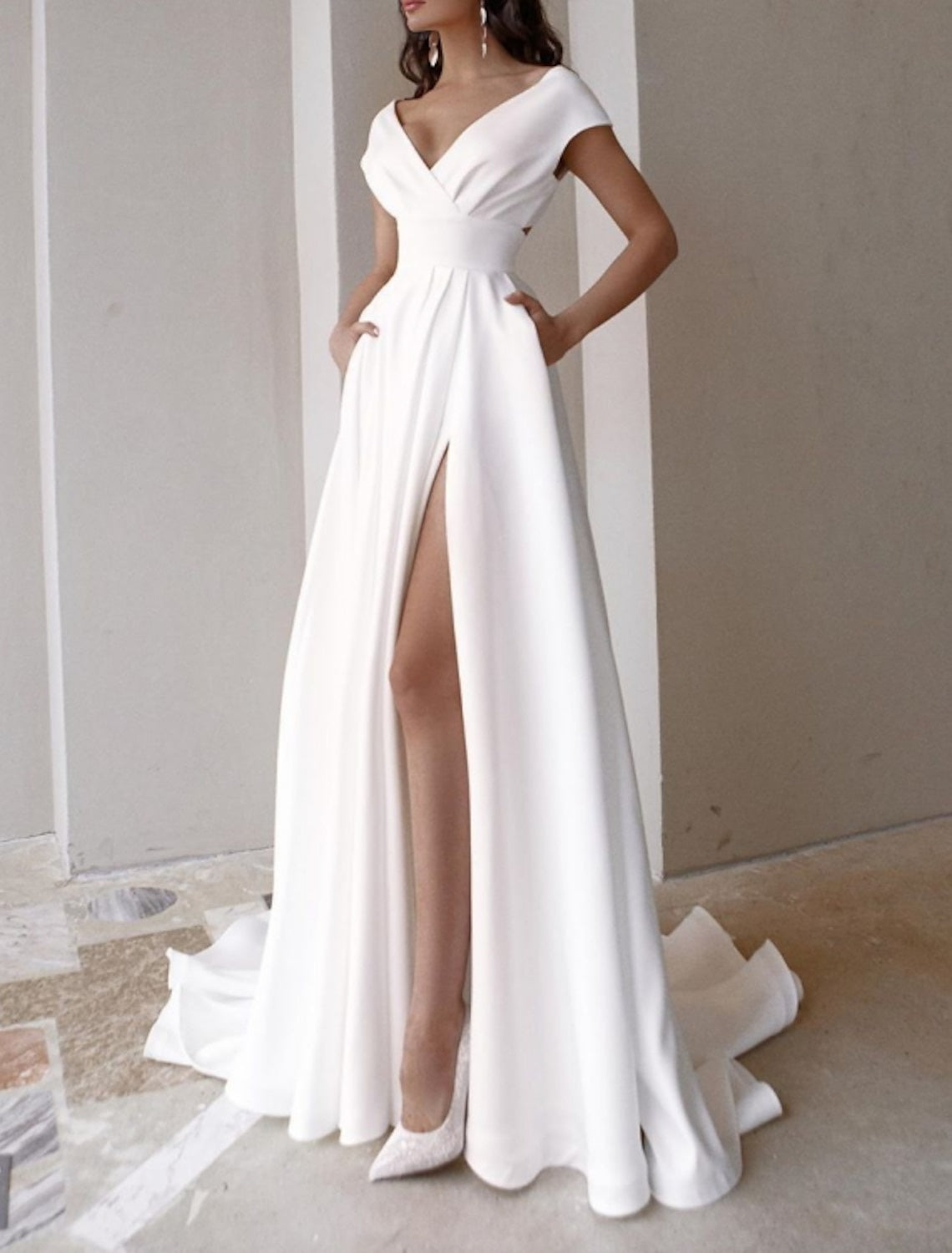
- V-Neck A-Line Wedding Dress LV52241205 is a useful reference when comparing a V-neck A-line silhouette with cap sleeves and a sweep train. Bring the cover-up to the final fitting so you can check shoulder room and the train together.
- V-Neck Tulle A-Line Wedding Dress LV89671477 offers a second A-line direction for checking how a layer frames an open neckline and a fuller skirt. Review the live product page for current sizing, colors, and order details before choosing.
Neither gown needs to dictate a single kind of outerwear. Use the final neckline, skirt volume, weather forecast, and the length of time you will be outdoors to decide what will be comfortable.
Test the complete outfit before the wedding day
Schedule a short, practical rehearsal after the dress alterations are complete.
- Put on the dress, shoes, and intended layer in the order you will use them.
- Raise your arms, hold a bouquet, sit down, and get into a car.
- Walk on the same kind of surface you expect at the venue, especially stairs or wet pavement.
- Take photos with the cover-up both open and closed.
- Practice who will carry or store it during the ceremony and reception.
- Pack a backup warm layer for travel if your main piece is delicate or ceremonial.
For a broader cold-weather outfit plan, see winter formal dresses. The formality guidance is useful for guest events too, but your bridal layer should ultimately support your own ceremony schedule.
Shop wedding dresses for a winter plan
Browse wedding dresses and save silhouettes that work with your ceremony, fittings, and outdoor schedule. Once you have a shortlist, test each dress with the exact cover-up you expect to wear—not just with a sweater or coat that fits differently.
Frequently asked questions
What is the warmest cover-up for a winter wedding dress?
A properly fitted coat generally gives more coverage than a cape or wrap, but the warmest option is only useful if you can move comfortably in it. Match the layer to the actual outdoor time and keep it removable for heated indoor spaces.
Should a bride wear the cover-up during ceremony photos?
That depends on the weather, your comfort, and the photographs you want. Plan a few images with the layer and a few without it if conditions allow. Tell your photographer and coordinator in advance so the change does not interrupt the schedule.
Can a cover-up damage a wedding dress?
It can if tight sleeves, rough closures, or loose embellishments catch on the gown. Test the exact pieces together, including sitting and walking. Avoid forcing a layer over the dress on the wedding day if it did not fit comfortably at the final fitting.
Do I need a separate pair of shoes for winter travel?
Often, a warm and stable pair for travel can make the day easier, especially on wet or uneven ground. Change into ceremony shoes once you are safely indoors, and keep the travel pair available for the exit.