A winter formal dress should satisfy the invitation first and the temperature second. Choose the right level of formality, then decide whether sleeves, a longer hem, or a heavier-looking finish supports the event. Because heated venues can become warm, removable outerwear is often more useful than making the gown itself extremely heavy. Test the complete outfit for sitting, walking, and dancing before the event.
Decode the dress code before shopping by season
Winter changes the practical outfit plan, but it does not replace the invitation's dress code.
Black tie
Floor-length evening gowns are the clearest choice for black tie. Polished fabrics, refined embellishment, and a formal silhouette fit the setting. The black-tie dress code guide explains the distinction between black tie, black-tie optional, and cocktail attire.
Formal or black-tie optional
A floor-length gown remains appropriate, while a particularly polished midi may also work depending on the venue and local expectations. When uncertain, use the venue, start time, and host guidance to decide.
Cocktail
Knee-length, midi, and some ankle-length dresses can work. Winter color and texture may make the outfit feel seasonal, but the silhouette should still allow standing, dining, and dancing.
The dress code tells you how elevated the dress should look. The schedule tells you how it should perform.
Plan for the event's temperature zones
A formal evening may include a cold walk, heated reception room, crowded dance floor, and late-night departure. Write down where you will be and for how long.
- transportation and entrance
- coat check or outdoor waiting
- ceremony or presentation seating
- dinner temperature
- dancing or standing periods
- departure conditions
If most of the event is indoors, choose the gown for indoor comfort and use a formal coat for transitions. A dense long-sleeve gown may be too warm after dinner even if it feels right at the entrance.
Ask about coat storage
A beautiful coat is only useful if it can be checked safely or kept nearby. Confirm coat-check availability and carry any wrap in a way that does not require constant attention.
Consider venue flooring
Winter moisture can make entrances slick. Stable heels, secure soles, and a hem that clears the ground protect both comfort and the dress.
Choose sleeves for fit and visual balance
Sleeves are one way to create a winter look, but they must move well.
Long sleeves
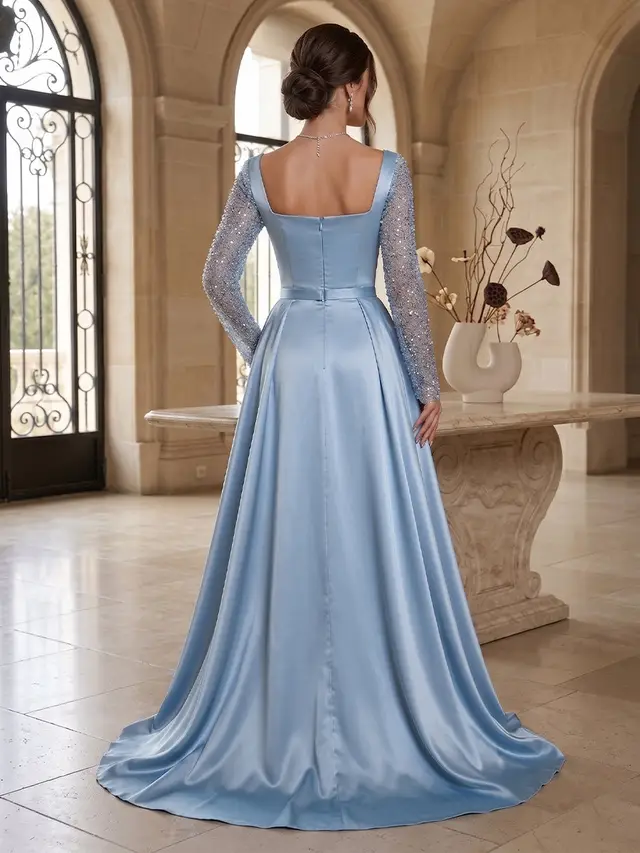
Long sleeves can create a strong continuous line and support a formal silhouette. Raise your arms, bend the elbows, and reach forward. Check that the back and neckline do not pull when the sleeves move.
Three-quarter sleeves
This length offers coverage while keeping the wrist visible for jewelry. It can feel less warm and may be easier for dining. Confirm that the sleeve ends at an intentional point rather than the widest part of the forearm if that placement bothers you.
Sleeveless gowns with outerwear
A sleeveless gown can be the most comfortable option in a warm venue. Pair it with a coat, cape, or wrap for the outdoor portion. Coverage does not have to come from the dress itself.
Compare fabrics by light, movement, and care
Winter formalwear often uses shine, texture, or embellishment. Each requires a different handling plan.
Sequins and beading
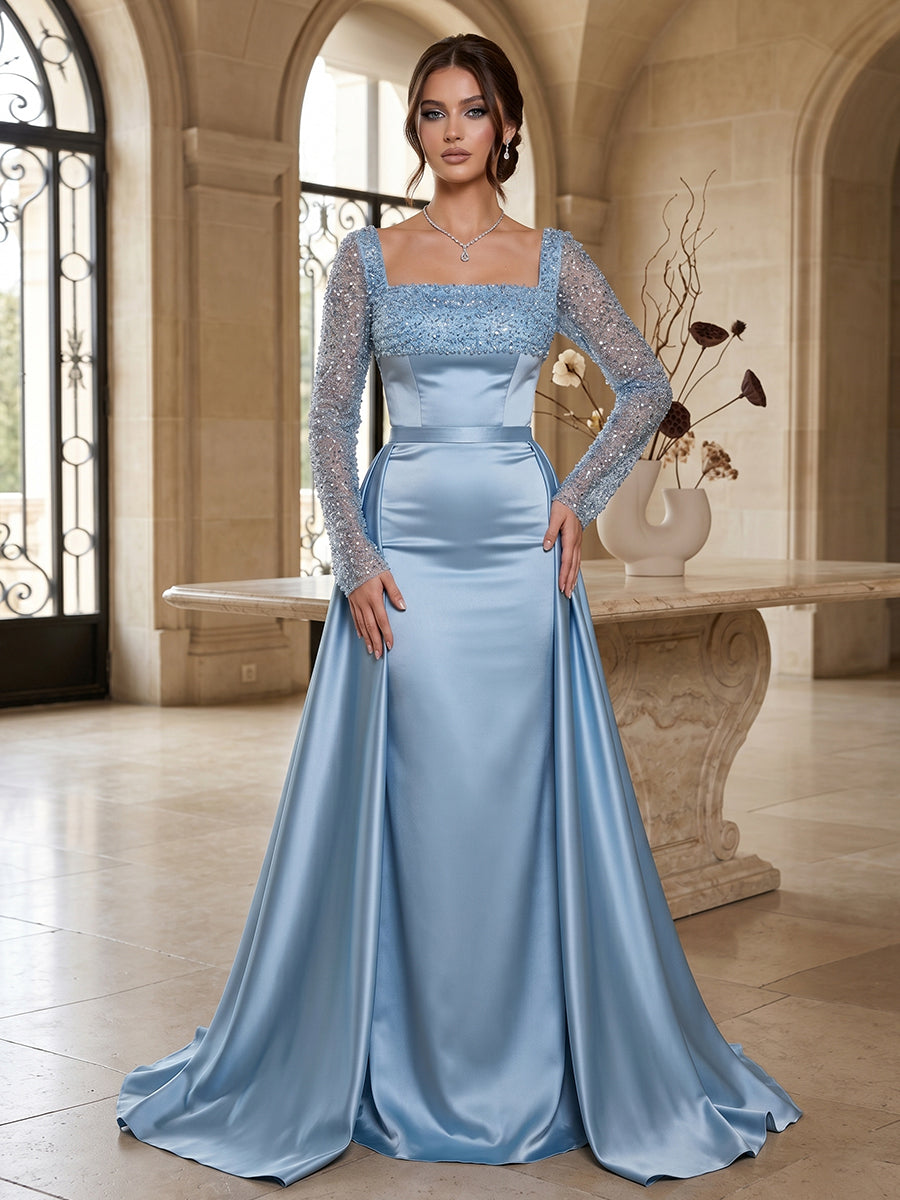
These finishes catch low evening light and immediately raise the formality. Check whether embellishment scratches the arms, catches on a wrap, or adds weight at the shoulders. Alterations around decorated seams may be more complex.
Satin
Satin creates a smooth, reflective surface. It can look elegant in winter jewel tones and neutrals, but it shows wrinkles and seam tension clearly. View it under flash and plan careful transport.
Chiffon and lighter layers
Chiffon can still work in winter, especially indoors. Deeper color, long sleeves, or a formal silhouette can provide seasonal depth without heavy weight. The formalwear fabric care guide helps with storage, wrinkles, and embellished surfaces.
Use length to match formality and movement
Floor-length gowns suit the most formal events, but the hem must work with shoes and stairs. Midi lengths can suit cocktail or some formal invitations and make footwear more visible.
During a fitting:
- Wear the final heel height.
- Walk at normal speed and turn.
- Sit without pulling the skirt into place repeatedly.
- Take stairs if the venue has them.
- Check the hem from the side and back.
- Practice lifting the skirt slightly for a wet entrance.
Do not leave hemming until the last moment. A clean length changes both safety and polish.
Build a coordinated outerwear plan
Formal outerwear should fit over the gown without compressing the sleeves or decoration.
Tailored long coat
A clean wool-look or structured coat can match a full-length gown. Check shoulder room and whether the coat hem competes with the dress.
Cape
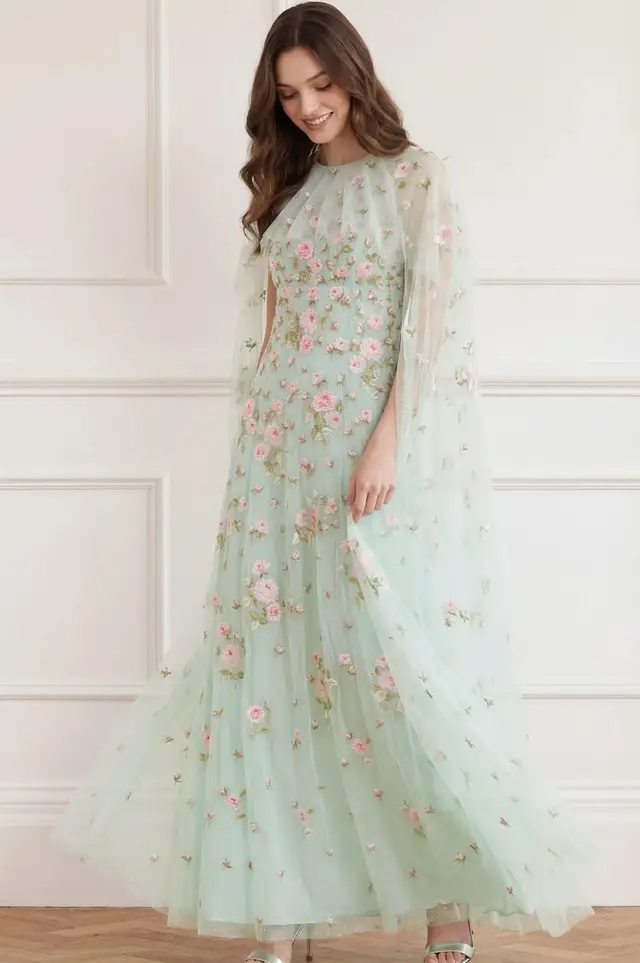
A cape accommodates sleeve volume and can look ceremonial. Test the neckline closure with earrings, necklaces, and the gown's embellishment.
Wrap
A wrap is easy to remove and carry, but it provides less protection in severe cold. Practice arranging it so it stays in place during outdoor photographs.
Avoid unverified shortcuts that could stain or snag the dress. Use the care information for each garment.
Select color and accessories with restraint
Deep blue, burgundy, green, black, silver, and other rich shades suit winter events, but season alone should not determine color. Consider the host's guidance, event type, and your existing outerwear.
If the gown has sequins or beading, let that detail lead. Choose earrings, bag, and shoes that support rather than compete. A cleaner gown can accept a stronger necklace, metallic shoe, or textured wrap.
The formal dresses for older women guide provides additional proportion and comfort advice that applies at any age.
Verified Lovavere styles to compare
- Square-Neck Long-Sleeve Sequin Evening Gown offers a floor-length column direction with long sleeves, sequins, and beading. Its live page lists standard sizes through 22.
- Elise Black-Tie Evening Gown provides a cape-detail evening comparison. Its live page currently lists a narrower standard-size range, so verify the current choices and product-specific chart before ordering.
Confirm current availability, measurements, and policies on each product page. Compare sleeve mobility, decoration weight, and outerwear compatibility as carefully as the front view.
Shop winter formal dresses
Browse evening dresses and filter your shortlist by the invitation's formality. Then test each gown against the real temperature transitions, shoe height, seating, and movement the event requires.
Frequently asked questions
Do winter formal dresses need sleeves?
No. Sleeves can create coverage and a seasonal line, but a sleeveless gown with formal outerwear may be more comfortable in a heated venue.
Can I wear a midi dress to a winter formal event?
It depends on the invitation. A polished midi can work for cocktail and some formal events, while black tie is more reliably served by a floor-length gown.
What coat works over an evening gown?
A tailored long coat or cape usually accommodates a formal silhouette best. Try it over the gown's actual sleeve and shoulder volume before the event.
Are sequins appropriate for winter formalwear?
Yes, when they fit the dress code and event setting. Check comfort, weight, snagging, and alteration limitations before choosing an embellished gown.