Cape-sleeve evening gowns combine formal movement with shoulder or arm coverage, but the cape must work while you sit, walk, dine, and dance. Choose the dress for its complete construction, not the cape alone. Check attachment points, fabric weight, arm range, and how the back fits beneath coats or around chairs before ordering.
Know which cape construction you are choosing
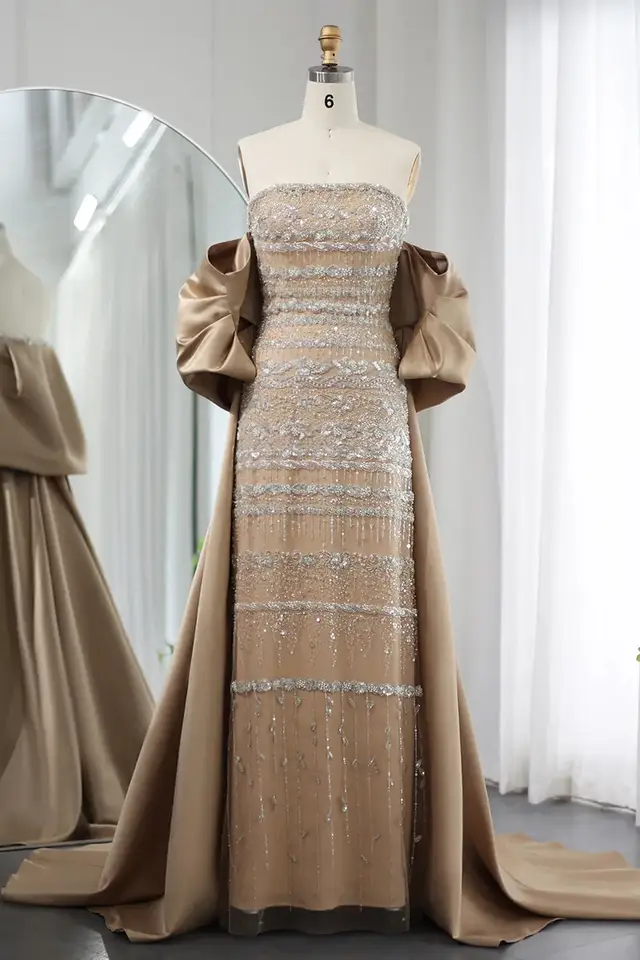
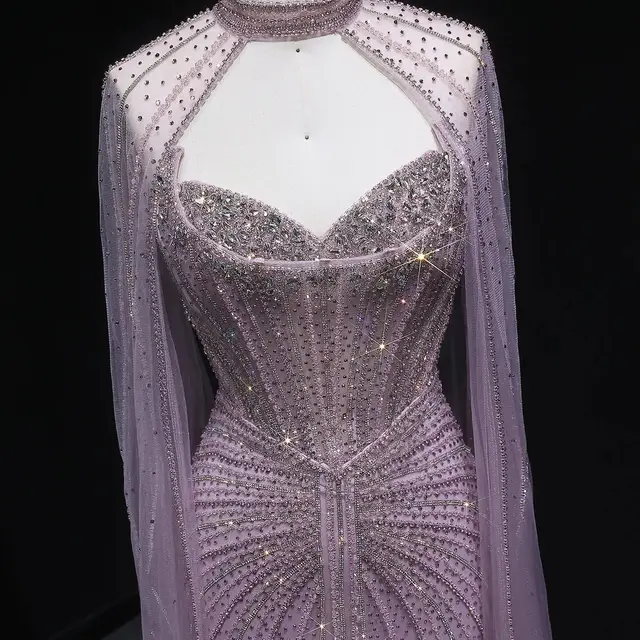
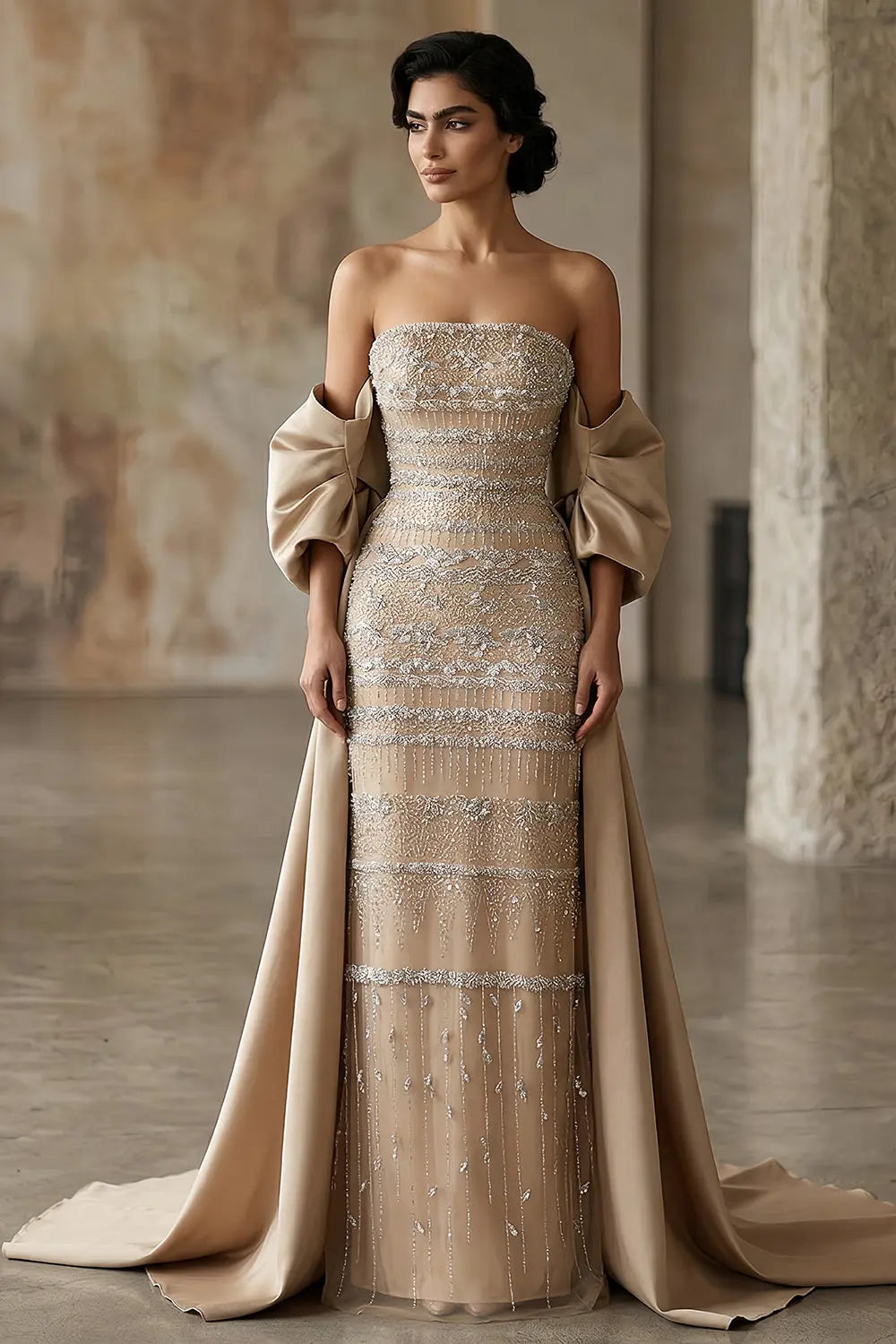
Some capes are integrated into the shoulders or neckline, while others are detachable. Cape sleeves may fall from the upper arm, and Watteau-style panels may begin at the back. Each design moves differently and creates a different level of coverage.
For formality context, read the black-tie dress code guide and the black-tie gala scene. A cape detail can look dramatic, but the fabric, length, and overall gown still determine whether it fits the event.
Test movement from every angle
Raise and extend your arms
Lift your arms, reach forward, and hold a small bag. The cape should not pull the neckline backward or restrict the shoulder seam.
Sit in a chair with a back
Long panels can bunch behind the body or trail near chair legs. Practice gathering and placing the fabric neatly without twisting the bodice.
Turn and walk at event pace
Beading and long cape panels add momentum. Make sure the fabric does not wrap around your arms or catch on embellishment, jewelry, or the bag closure.
Balance cape weight with the gown
Light tulle creates airy movement, while satin and dense beading feel more substantial. A fitted mermaid skirt plus a long cape creates a different walking experience from an A-line skirt with shorter cape sleeves.
Compare the Beaded Champagne Evening Gown with Cape Sleeves with the Beaded Tulle Evening Gown with Cape Sleeves. Their live pages are the source for current colors, sizes, and details.
If warmth is the main concern, the winter formal dress guide explains why a cape detail may still need a separate coat outdoors.
Keep accessories deliberate
A detailed neckline or beaded cape often needs little necklace. Earrings, a compact bag, and a bracelet can add polish without catching the moving fabric. Test hair against the attachment points; loose hair may snag on beading or conceal the neckline.
For alterations, ask whether the cape can be adjusted separately from the bodice. Changing shoulder placement can alter both coverage and hem alignment.
- Confirm the event dress code.
- Test the cape while sitting and moving.
- Check jewelry and hair for snag points.
- Fit the gown with final undergarments and shoes.
- Plan an outdoor coat independently of the decorative cape.
The formal wear care guide explains safe handling for tulle, satin, sequins, and beadwork.
Shop formal evening gowns
Browse evening and formal dresses to compare cape sleeves, conventional sleeves, necklines, and skirt shapes. Verify the complete gown measurements rather than choosing by sleeve detail alone.
Frequently asked questions
Are cape sleeves warm?
Usually not enough for cold outdoor weather. Many are decorative, sheer, or open, so plan a suitable coat or wrap separately.
Can a cape-sleeve gown work for black tie?
Yes, when the gown's length, fabric, construction, and styling meet the event's formal expectations. The cape itself does not determine the dress code.
Can cape sleeves be altered?
Sometimes. It depends on how they attach and whether they contain beading, borders, or shaped seams. Ask a qualified alterations professional before buying.